
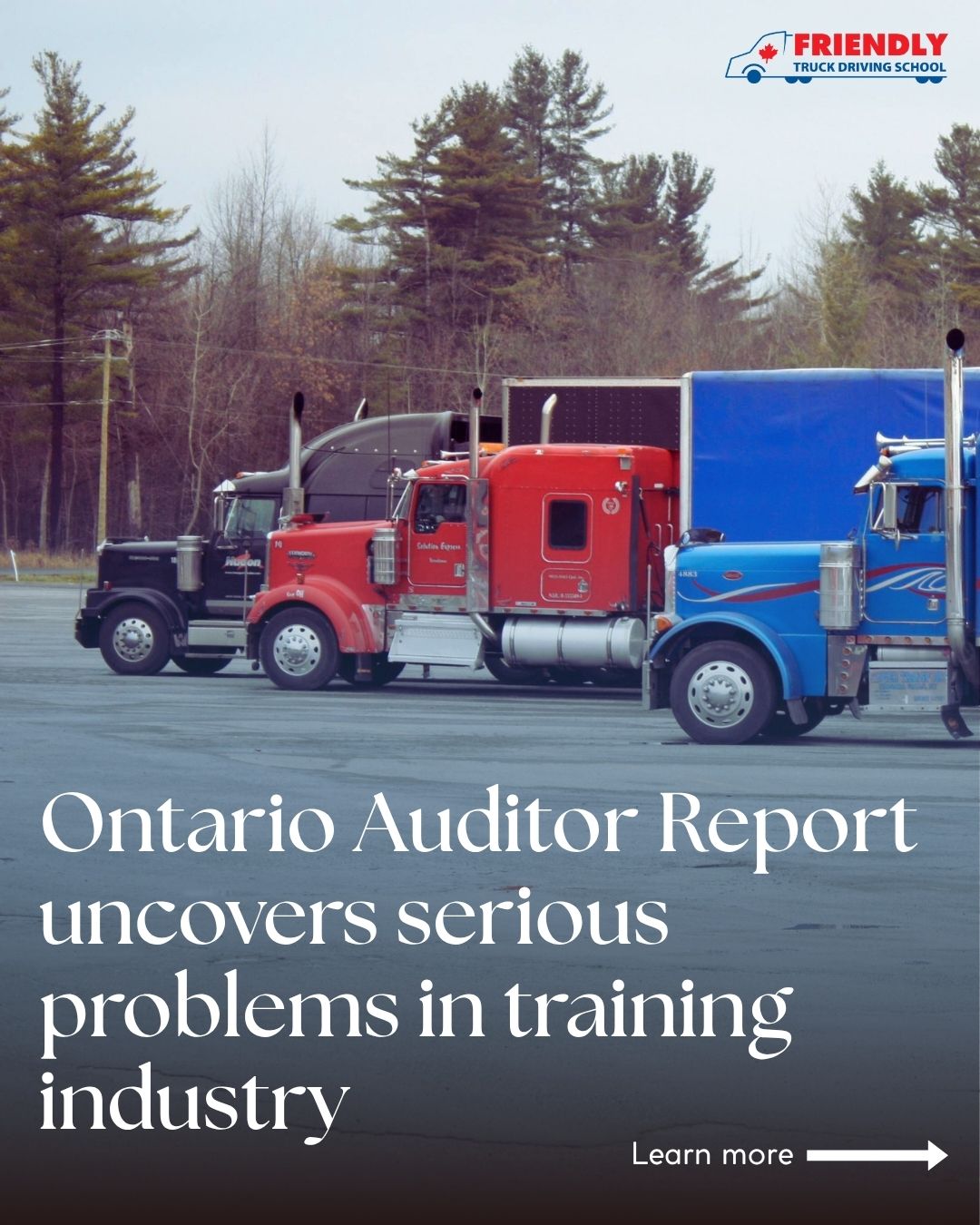
Is Your Truck Driving School Cutting Corners? What the 2026 Ontario Auditor General Report Reveals
The trucking industry is the backbone of Ontario’s economy, but a recent 2026 report from the Ontario Auditor General has raised a massive red flag regarding the quality of driver training across the province.
For anyone looking to obtain their AZ or DZ license, this report is a must-read. It reveals that while most students believe they are being prepared for a career on the road, some schools are prioritizing “fast licensing” over fundamental safety.
The Shocking Findings of the 2026 Audit
The audit investigated the Mandatory Entry-Level Training (MELT) program and found significant gaps in how training is being delivered. Some of the most concerning findings include:
- Missing Hours: While the law requires a minimum of 103.5 hours of training, auditors found some schools were delivering as little as 59 to 81 hours.
- Skipped Skills: Some students were issued certificates despite never being taught critical maneuvers like emergency stops, reverse parking, or handling major intersection turns.
- Unqualified Instruction: The report highlighted instances of instructors who lacked the proper credentials to be training the next generation of commercial drivers.
- Systemic Gaps: Unregistered schools were found to still be connected to training and testing systems, bypassing government oversight.
Why Quality Training Matters
The stakes for commercial driving are higher than for any other vehicle class. According to the report, large commercial trucks make up only 3% of vehicles on Ontario roads, yet they are involved in 12% of all fatal collisions.
When a school cuts 40 hours of training, they aren’t just saving time—they are sending drivers onto highways like the 401 or the QEW without the muscle memory needed to react to a crisis.
How to Choose a Good Truck Driving School in Ontario
In light of these findings, how do you ensure the school you choose is actually preparing you for the job? Here is what you should look for:
1. Total Transparency on Hours
A reputable school will have a clear schedule that accounts for every one of the 103.5 mandatory hours. Ask to see the breakdown of classroom time, yard time, and—most importantly—the 50 hours of behind-the-wheel instruction.
2. Focus on “The Big Three” Maneuvers
Don’t just learn how to pass the road test. Ensure your curriculum includes:
- Emergency Braking: Knowing how to stop a loaded trailer in a split second.
- Complex Intersections: Navigating tight turns in urban environments safely.
- Backing and Parking: Mastering precision in the yard before you have to do it at a busy shipping dock.
3. Instructor Experience
Ask about the instructors’ backgrounds. Have they spent years over the road? Are they registered with the Ministry? Good training comes from people who have actually faced the challenges of the industry.
4. Reputation Over Price
If a school is significantly cheaper or promises a license much faster than others, ask yourself why. You are investing in a career; a “fast” license is useless if you don’t have the skills to keep your job—or stay safe—once you’re hired.
Final Thoughts
The 2026 Auditor General report is a call to action for the entire industry. As a prospective driver, you have the power to demand better. Choose a school that respects the 103.5-hour standard and prioritizes your safety over their bottom line.
The road is a massive responsibility. Make sure your training is up to the task.
